The Difference Between Barat and Walima: A Clear Guide for Islamabad Families
Written by the Wallayat Banquet Hall Events Team · 6 October 2026
Introduction: Two Days, Two Hosts, One Marriage
A Pakistani wedding is rarely a single evening. Most families in Islamabad and Rawalpindi celebrate over several days, and the two largest functions are almost always the barat and the walima. Couples and guests alike often ask how the two differ.
Understanding the difference between barat and walima makes planning far easier. It tells you who books the hall, who sends the invitations, what the stage should look like and how the evening should feel. However, customs vary between families, regions and communities, so treat this guide as a general picture rather than a fixed rule.
The Difference Between Barat and Walima at a Glance
Who Hosts Each Event
Traditionally, the bride's family hosts the barat. The groom arrives with his family and friends as a procession, and the bride's side receives them as honoured guests. The walima, by contrast, is hosted by the groom's family, who invite relatives and friends to celebrate the marriage.
Therefore, the two events are usually planned, booked and paid for by different households. Many modern families share costs or plan jointly, so agree responsibilities early.
The Purpose of Each
The barat is the day the bride leaves her parents' home. It centres on the arrival of the groom's party and, in many families, the nikkah itself. The walima is the marriage feast given by the groom's side. It holds religious significance as a sunnah, and it publicly announces and celebrates the marriage.
Order and Gap Between Them
The barat comes first and the walima follows. Commonly the walima is held the next day or a couple of days later, although some families leave a longer gap to allow relatives to travel. Accordingly, check hall availability for both dates before printing a single card, especially during Islamabad's wedding season from roughly October to February.
Rituals at the Barat
The Arrival
The groom's procession is welcomed at the entrance, often with flowers and music. Consequently, the venue's entrance, driveway and parking matter a great deal on a barat night, because a large group arrives together rather than gradually.
Nikkah
Some families hold the nikkah at the barat, on stage or in a quieter corner with elders and witnesses. Others complete it beforehand at a mosque or at home. Therefore, tell the venue which applies, so seating, sound and a calm space can be arranged.
Stage Customs and Rukhsati
Playful customs such as joota chupai and doodh pilai are popular, although not every family observes them. The evening ends with the rukhsati, when the bride departs with her husband and his family. Plan a clear, well-lit route from the stage to the car.
What Happens at the Walima
A Calmer Reception
The walima has fewer rituals. The couple arrive together, greet guests from the stage, pose for photographs and share a meal with everyone.
Mood and Formality
The barat tends to be festive, emotional and lively. The walima is generally more relaxed and elegant, with the couple at ease as newly-weds.
Dress, Colours and Decor
What the Couple Wear
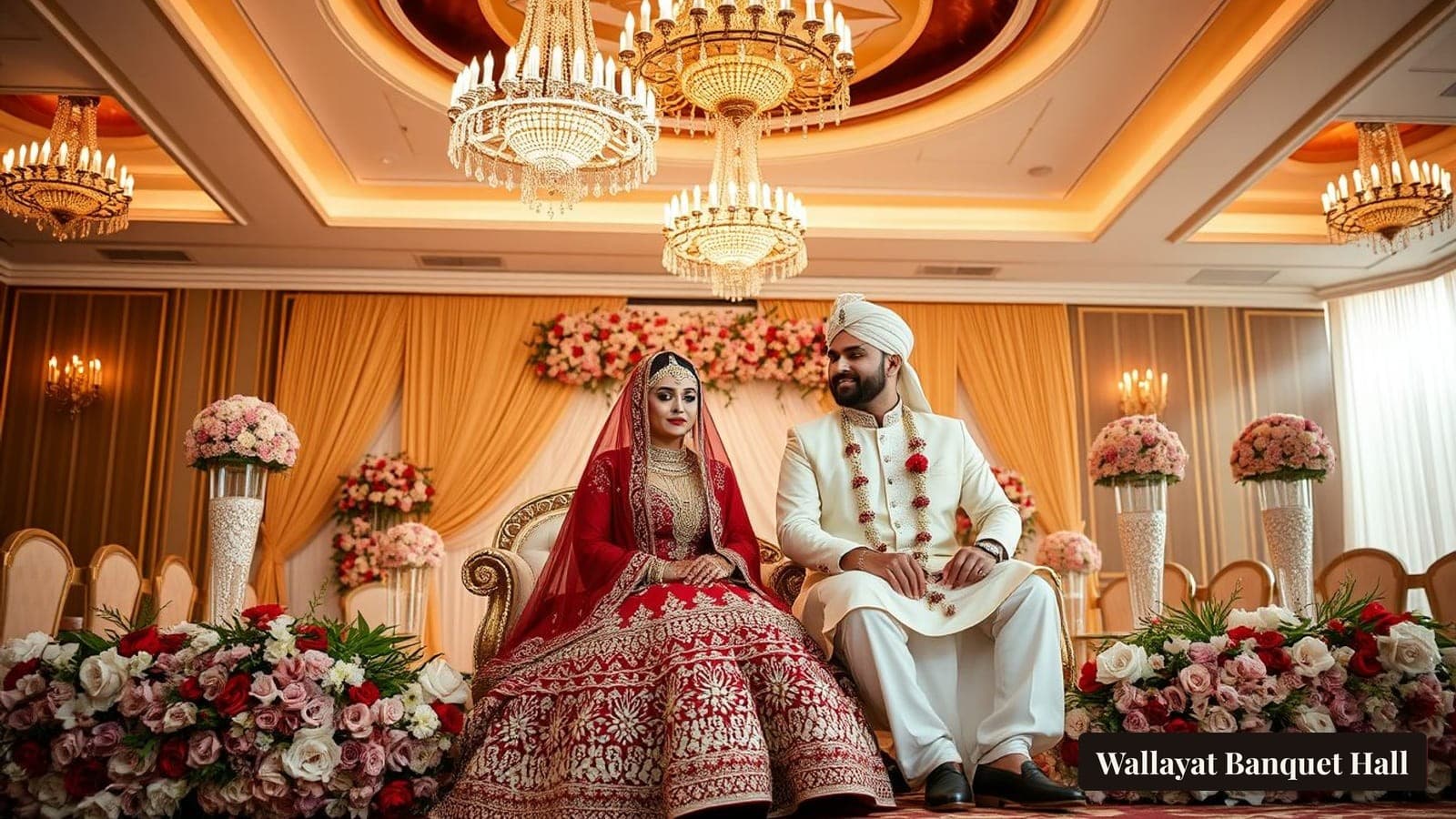
Brides traditionally choose deep, rich colours such as red or maroon for the barat, with heavier embroidery and jewellery. For the walima, softer shades such as pastels, ivory, silver or gold are common. Grooms often wear a sherwani at the barat and a suit or a lighter sherwani at the walima. However, these are trends rather than rules, and many couples choose freely.
Stage and Hall Styling
Decor usually follows the dress. Barat stages favour warm, traditional tones and rich florals, while walima stages lean towards lighter, softer palettes. Moreover, a barat needs a strong entrance, a wide aisle and room on stage for family customs. A walima needs a comfortable stage for long photograph sessions and easy movement between tables.
Guest Lists and Venue Needs
Who Is Invited
At the barat, the bride's family invites its own circle, and the groom's side brings an agreed number of baratis. At the walima, the groom's family leads the list and the bride's relatives attend as guests. Therefore, confirm numbers between the two families in writing to avoid awkward surprises.
Choosing the Right Hall Size
Guest counts for the two events are often different. Accordingly, you might need a larger hall for one night and a more intimate one for the other. Viewing the halls in person helps both families judge space for the stage, aisle and dining.
Combining Barat and Walima into One Event
Some families now hold a single combined reception, with both sides hosting together. This saves time, reduces travel for out-of-city relatives and simplifies planning.
However, a combined event needs care. Both families should agree the guest list, stage style, order of rituals and how costs are shared. Additionally, consider whether elders are comfortable with merging the two occasions, since the walima carries its own religious meaning.
Planning Both in Islamabad Under the One-Dish Rule
The Rule Applies to Both
Islamabad's one-dish regulation applies to marriage functions, including both barat and walima. Consequently, neither family can plan an unrestricted buffet. A good venue will explain what is currently permitted and design a menu that still feels generous. Review the menu options and ask for custom one-dish menus for each night.
Timing
Venues must follow Islamabad's closing-time rules, so confirm the finishing time with the venue. Therefore, print a realistic arrival time on invitations and plan the rukhsati and dinner so nothing is rushed.
Costs in PKR
Barat and walima are normally quoted separately, usually as a per-head catering charge plus hall, decor and any extras. Because the hosts often differ, each family should receive its own itemised written quotation in PKR. Additionally, ask whether booking both events at the same venue affects the arrangement, and compare the wedding packages. Contact the venue for current packages.
How Wallayat Banquet Hall Can Help
Wallayat Banquet Hall is on Main Islamabad Highway near Gulberg Greens, convenient for guests from Islamabad sectors, Rawalpindi, Bahria Town and DHA. Our Grand Hall hosts up to 250 guests and Crystal Hall up to 150, so families can match each function to the right room.
Both halls are fully air-conditioned with power backup, ample on-site parking and a private bridal room. Moreover, our in-house team handles stage decor, sound, catering and event management, with custom one-dish menus for barat and walima alike.
Conclusion
The difference between barat and walima comes down to host, purpose and mood. The bride's family hosts the barat, with the groom's arrival and the rukhsati at its heart. The groom's family hosts the walima, a calmer feast celebrating the marriage. Therefore, plan each on its own terms, and book both dates early.
Ultimately, both evenings honour the same couple. Respect your family's customs, and choose a venue that understands them.
Contact Us
To check availability for your barat and walima dates, view both halls or request a written quotation, call or WhatsApp +92 313 5000996, email tranzesta@gmail.com, or visit wallayatbanquethall.com/#contact. Further planning guides are published at wallayatbanquethall.com/blog.
Frequently Asked Questions
What is the main difference between barat and walima?
The barat is traditionally hosted by the bride's family and ends with the rukhsati. The walima is the marriage feast hosted by the groom's family afterwards.
Does the one-dish rule apply to both barat and walima in Islamabad?
Yes. Islamabad's one-dish regulation applies to marriage functions, including both. Ask the venue what is currently permitted.
How many days are there between barat and walima?
Often the walima is the next day or a couple of days later, but customs vary between families.
Can barat and walima be combined into one event?
Yes, some families hold a joint reception. Both sides should agree the guest list, rituals and cost-sharing first.
What capacity do the halls at Wallayat offer, and is there parking?
The Grand Hall hosts up to 250 guests and Crystal Hall up to 150, with ample on-site parking.
How far ahead should we book, and what does it cost?
Book as early as possible for October to February dates. Prices are not quoted here; call +92 313 5000996 for current packages.
Disclaimer
This article offers general wedding-planning guidance for Islamabad and Rawalpindi, current as of October 2026. Wedding customs vary between families and communities, and venue policies, civic regulations, supplier terms and seasonal demand change over time; prices are intentionally not quoted here. Contact Wallayat Banquet Hall at +92 313 5000996 or via wallayatbanquethall.com for current, written quotations.
Planning your event in Islamabad or Rawalpindi?
Wallayat Banquet Hall has two elegant halls and custom one-dish menus. Check your date and get a quote today.