Pakistani Wedding Functions in Order: From Dholki to Walima in Islamabad
Written by the Wallayat Banquet Hall Events Team · 30 September 2026
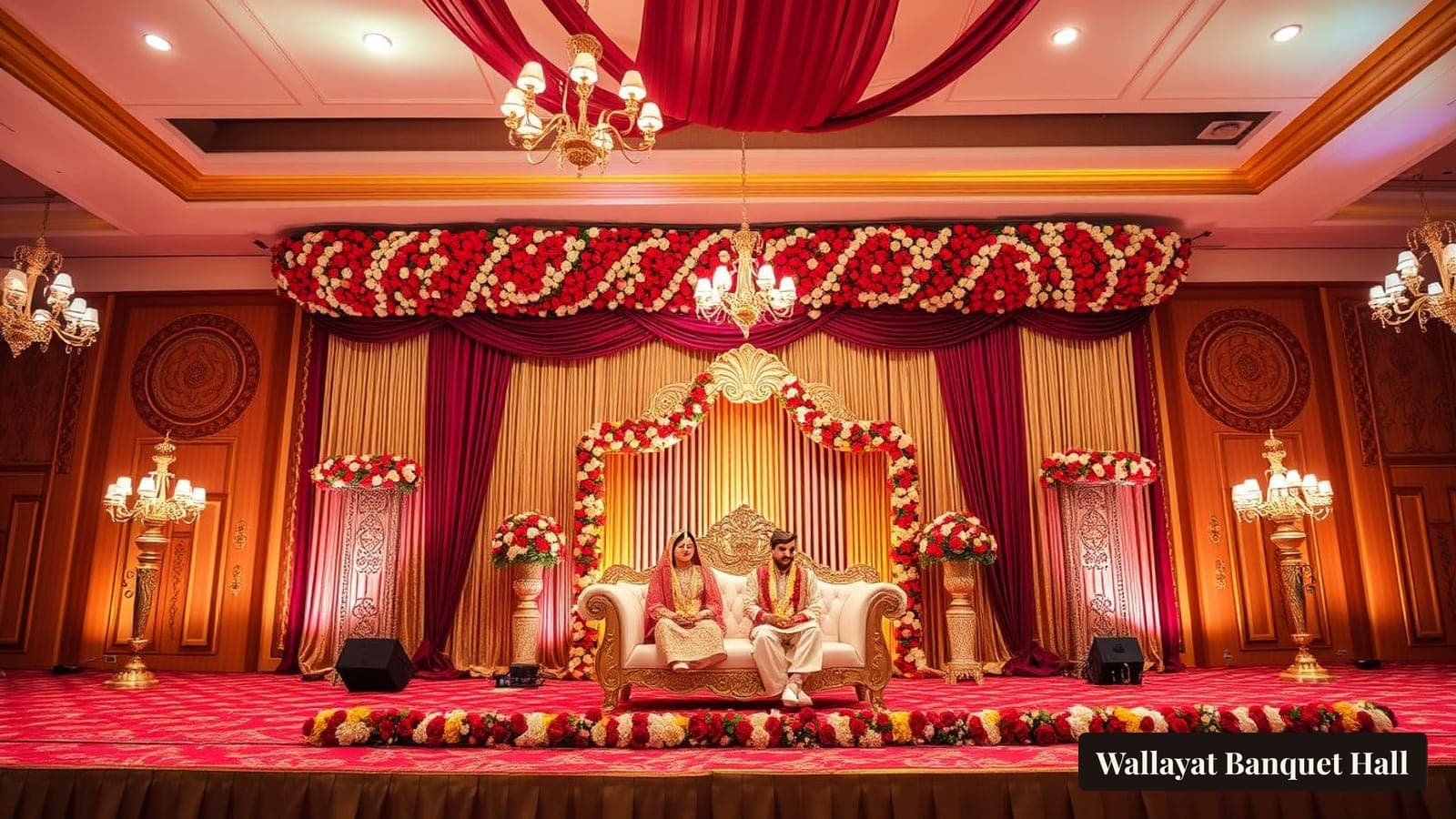
Introduction: A Wedding Is a Season, Not a Day
A Pakistani wedding is rarely a single event. Instead, it unfolds over a week or more, with each function carrying its own mood, dress, food and guest list. For couples planning in Islamabad or Rawalpindi — and for relatives abroad trying to follow along — knowing the Pakistani wedding functions in order makes everything easier: which halls to book, how many guests to expect and where the budget goes.
This guide walks through each function in the usual sequence, explains what happens, and notes what to consider when booking a hall in Islamabad. Customs vary between families and regions, so treat this as the common pattern rather than a rule.
Before the Wedding Week
Rishta and Engagement (Mangni)
The families agree the match, often followed by an engagement ceremony where rings are exchanged. It may be months before the wedding. Typically, it is a smaller event at home or in a hall for close family.
Dholki
In the weeks before the wedding, the bride's and groom's homes host evenings of dhol, singing and dancing. Traditionally these are informal home gatherings. However, many Islamabad families now combine several dholkis into one evening in a small hall for convenience.
The Wedding Week
1. Mayoun (Ubtan)
A few days before the wedding, the bride — and separately the groom — is anointed with ubtan, a turmeric paste, by female relatives. It marks the start of the wedding proper. Consequently, the mood is intimate, yellow-themed and usually at home, although small hall bookings are increasingly common.
2. Mehndi
The mehndi is the most colourful night: henna for the bride, dances prepared by both families, songs and a lively competition between the two sides. Often each family hosts its own mehndi, and sometimes they are combined.
For a mehndi, a hall with a good sound system, a dance floor area and a vibrant stage matters most. Additionally, mehndi guest lists tend to be younger and more energetic.
3. Nikkah
The nikkah is the religious marriage contract, conducted by a maulvi with witnesses and the haq mehr agreed. It may take place at a mosque, at home, or at the start of the barat in the hall. Some families hold it earlier as a separate, quieter event.
4. Barat
On the barat day, the groom's family arrives in procession at the bride's venue. The bride's family traditionally hosts this function, including the dinner. It is usually the largest and most formal event, so hall capacity, parking and stage décor matter most here.
5. Rukhsati
At the end of the barat, the bride formally departs with the groom's family. It is an emotional moment, often with the Quran held over the bride's head. Therefore, plan good lighting and a clear path from stage to car for photographs.
6. Walima
The walima is hosted by the groom's family, usually a day or two after the barat, to celebrate the consummated marriage. It is a Sunnah, generally calmer and more elegant than the barat, and often the other large guest-list event.
After the Wedding
Chauthi and Dinners
Some families observe chauthi, when the bride visits her parents' home, and relatives host dinners for the newlyweds over the following weeks. These are typically home events or restaurant meals.
Planning the Functions in Islamabad
Which Functions Need a Hall?
Most Islamabad families book a hall for the barat and walima, often for the mehndi, and sometimes for the dholki or mayoun. Consequently, one venue with two halls of different sizes can host several functions with consistent quality.
Capacity by Function
Guest lists differ: a mayoun may be 40 people, a mehndi 150, a barat or walima 250 or more. Therefore, match each function to the right hall rather than booking the largest room every time.
The One-Dish Rule
Islamabad's one-dish regulation limits what can be served at marriage functions, and the exact permitted items can change. Review the menu options and confirm current requirements with your venue, since barat and walima menus fall squarely under it.
Timing and Season
Wedding season in Islamabad runs roughly from October to February, and weekend evenings book early. Accordingly, secure barat and walima dates first, then fit the other functions around them.
Budget in PKR
The barat and walima usually take the largest share of the budget. Compare the wedding packages and ask for written quotations for each function, rather than relying on old figures.
How Wallayat Banquet Hall Can Help
Wallayat Banquet Hall is on Main Islamabad Highway near Gulberg Greens, convenient for families in Islamabad sectors, Rawalpindi, Bahria Town and DHA. Our Crystal Hall, for up to 150 guests, suits mehndi, mayoun and dholki evenings, while our Grand Hall, for up to 250 guests, suits barat and walima.
Both halls are climate-controlled with power backup and ample on-site parking. Additionally, our team designs custom one-dish menus and handles stage décor and event management across every function.
Conclusion
Knowing the Pakistani wedding functions in order — dholki, mayoun, mehndi, nikkah, barat, rukhsati and walima — turns a confusing week into a clear plan. Therefore, fix the big two dates first, size each hall to its guest list, and keep the menu within Islamabad's rules.
Ultimately, each function tells part of the story. Choose a venue that can carry the whole story well.
Contact Us
To check availability for your wedding functions, view both halls, or request written quotations, call or WhatsApp +92 313 5000996, email tranzesta@gmail.com, or visit wallayatbanquethall.com/#contact. Further planning guides are published at wallayatbanquethall.com/blog.
Frequently Asked Questions
What is the order of Pakistani wedding functions?
Commonly: engagement, dholki, mayoun, mehndi, nikkah, barat with rukhsati, and walima. Customs vary between families and regions.
Who hosts the barat and who hosts the walima?
The bride's family traditionally hosts the barat, and the groom's family hosts the walima.
Is the nikkah on the same day as the barat?
Often yes, at the start of the barat. However, many families hold it earlier as a separate event.
Does the one-dish rule apply to every function?
It applies to marriage functions such as barat and walima. Confirm current requirements with your venue for each event.
How many days does a Pakistani wedding last?
The main functions usually span three to five days, with dholkis in the weeks before.
Can one venue host several functions?
Yes. At Wallayat, Crystal Hall suits smaller functions and the Grand Hall suits barat and walima. Call +92 313 5000996 to plan dates.
Disclaimer
This article offers general wedding-planning guidance for Islamabad and Rawalpindi, current as of September 2026. Customs vary between families, and venue policies, civic regulations and seasonal demand change over time; prices are intentionally not quoted here. Contact Wallayat Banquet Hall at +92 313 5000996 or via wallayatbanquethall.com for current, written quotations.
Planning your event in Islamabad or Rawalpindi?
Wallayat Banquet Hall has two elegant halls and custom one-dish menus. Check your date and get a quote today.