Pakistani Wedding Rasams Explained: A Friendly Guide for Families and Hosts
Written by the Wallayat Banquet Hall Events Team · 7 October 2026
Introduction: The Little Moments Everyone Remembers
Ask any family in Islamabad or Rawalpindi what they remember from a wedding, and the answer is rarely the stage flowers. It is the cousins bargaining over a pair of shoes, the groom pretending he has no money, and the quiet minute when the bride leaves her parents' side.
These moments are the Pakistani wedding rasams — the customs woven through the mehndi, barat and walima. They are cultural traditions rather than religious requirements, and they vary a great deal between families, regions and communities. Therefore, treat this guide as a friendly overview, and let your own elders have the final word.
Pakistani Wedding Rasams at the Mehndi
Mehndi Lagai
At the mehndi function, elders and close relatives take turns to place a small dab of henna on the bride's palm, often on a leaf so her finished design is not spoiled, and feed her a little something sweet. In many families the groom receives the same gesture from the bride's side. Additionally, some households include a touch of oil in the hair as a blessing.
Planning the Mehndi Stage
Because relatives come up in small groups, the queue can grow quickly. Accordingly, ask for a low, wide seating arrangement with clear steps on both sides, so one group can leave as the next arrives. Moreover, keep a small table within reach for the mehndi tray, sweets and tissues.
Rasams as the Barat Arrives
Sehra Bandi
Sehra bandi is the tying of the sehra, a floral or beaded veil, on the groom's head by his elders, sisters or brothers-in-law. It usually happens at the groom's home before the barat sets off. However, some families prefer to do it at the venue, in which case a quiet side room or a corner near the entrance is helpful.
Rasta Rukai
When the barat reaches the hall, the bride's sisters and cousins block the groom's way, often with a ribbon or dupatta, and refuse to let him in until he pays a playful toll. Consequently, the entrance needs enough space for both sides to gather without blocking guests who are still arriving. Tell the venue in advance so the reception table and flower-petal welcome are placed sensibly.
Rasams on the Stage
Arsi Mushaf
After the nikah, the couple are seated together and, under a dupatta, see one another's reflection in a mirror, with the Holy Quran placed respectfully between them or in their hands. It is a tender, private custom. Therefore, ask the photographer and the family to agree who will be on stage, and keep the music low or off.
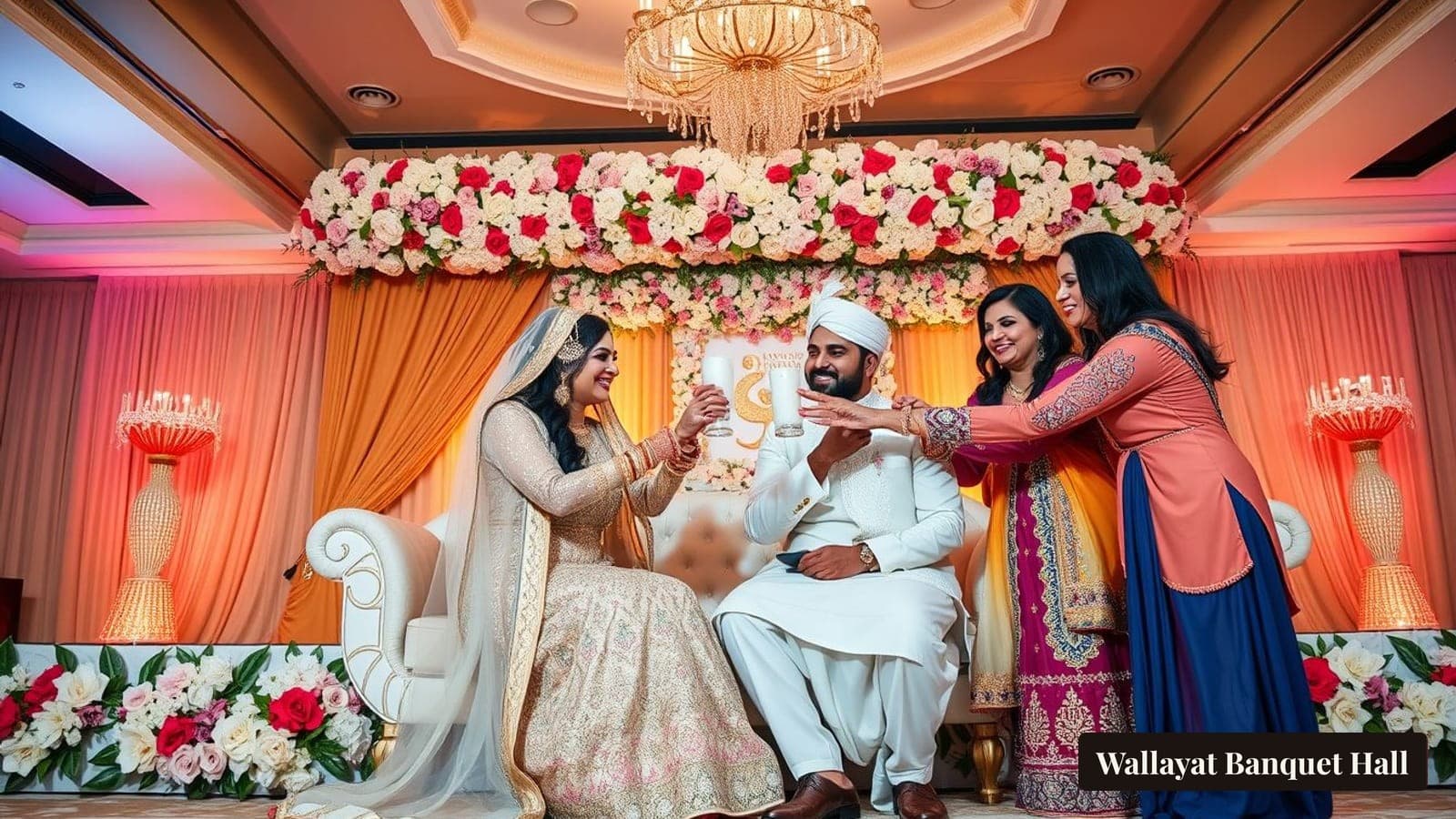
Doodh Pilai
The bride's sisters bring the groom a decorated glass of milk, and he is expected to give them a gift or cash in return. The bargaining is half the fun. Accordingly, allow room on stage for several sisters and cousins, and ask the venue where the decorated tray can be kept safely until it is needed.
Joota Chupai
While the groom is distracted, the bride's sisters and cousins hide his shoes and return them only after a good-natured negotiation with his brothers and friends. Additionally, the groom's side often tries to guard or steal the shoes back, so the game can wander across the hall. A sensible host agrees a few ground rules beforehand so that nothing delays dinner.
Salami
Salami is the cash gift that elders and guests give the couple as a blessing, usually when they come up to the stage for photographs. In some families it is given to the groom at the sehra bandi as well. Consequently, nominate one trusted relative on each side to collect envelopes and note the names.
Rukhsati and After
The Quran at Rukhsati
At rukhsati, the bride leaves her family, and in many households a brother or elder holds the Holy Quran above her head as she walks out, as a prayer for protection in her new life. It is an emotional few minutes. Therefore, keep the route from the stage to the car clear, well lit and free of trailing cables.
Mooh Dikhai
Mooh dikhai is the first formal showing of the bride's face to the groom's family, traditionally at his home after rukhsati, when relatives give her gifts or jewellery. However, some families hold it at the walima instead. Either way, it needs only a calm corner and a comfortable seat for the bride.
Fitting the Rasams into the Evening
Build a Running Order
Rasams take longer than families expect, and venues must follow Islamabad's closing-time rules. Accordingly, write a simple running order: arrival and rasta rukai, nikah if it is held at the hall, arsi mushaf, doodh pilai, photographs and salami, dinner, then rukhsati. Confirm the timings with the venue and share them with the photographer.
Stage Space and Sound
Ask how many people the stage can hold comfortably, and where the steps are. Moreover, a cordless microphone lets the whole hall hear the bargaining, which keeps guests entertained. Ask the venue what sound arrangements can be made.
Dinner and the One-Dish Rule
Islamabad's one-dish regulation applies to marriage functions such as the barat and walima, so plan the meal within it. Review the menu options with the catering team and time the service so that it does not clash with a rasam.
Costs in PKR
Rasams themselves cost little; it is the extras that add to a budget. Decorated trays, a mehndi seating set, additional stage flowers, a longer booking or an extra microphone may all be priced separately in PKR. Additionally, the cash exchanged in joota chupai and doodh pilai is a family matter and best agreed quietly in advance. Therefore, ask for an itemised written quotation and compare the wedding packages. Contact the venue for current packages.
How Wallayat Banquet Hall Can Help
Wallayat Banquet Hall is on Main Islamabad Highway near Gulberg Greens, convenient for guests from Islamabad sectors, Rawalpindi, Bahria Town and DHA. Our Grand Hall welcomes up to 250 guests and Crystal Hall up to 150, so both a full barat and a close family mehndi have a suitable setting.
Both halls are fully air-conditioned with power backup and ample on-site parking, and the private bridal room gives the bride a calm place before the rasams begin. Additionally, our in-house team handles stage decor, sound, catering and event management, and can help you shape a running order that leaves time for every custom your family holds dear.
Conclusion
Pakistani wedding rasams turn a formal function into a family story. They are traditions of affection and humour, not obligations, and every household keeps its own version. Therefore, choose the customs that matter to you, give each one a place in the running order, and make sure the stage and entrance have room for them.
Ultimately, a little planning lets everyone relax and enjoy the laughter.
Contact Us
To check availability, view both halls or request a written quotation for your wedding functions, call or WhatsApp +92 313 5000996, email tranzesta@gmail.com, or visit wallayatbanquethall.com/#contact. Further planning guides are published at wallayatbanquethall.com/blog.
Frequently Asked Questions
Are Pakistani wedding rasams religious requirements?
No. They are cultural customs that differ between families and regions. The nikah is the religious ceremony; the rasams are optional traditions.
How much time should we allow for rasams at the barat?
It depends on how many you include. Write a running order, agree it with the venue and photographer, and leave a margin before dinner and rukhsati.
How many guests can the halls hold?
At Wallayat, the Grand Hall accommodates up to 250 guests and Crystal Hall up to 150.
Does the one-dish rule apply to the barat and walima?
Yes. Islamabad's one-dish regulation applies to marriage functions, so the menu is planned within it. Our catering team will guide you.
Is there parking and a room for the bride?
Yes. The venue has ample on-site parking and a private bridal room.
How early should we book, and what does it cost?
Wedding season runs roughly from October to February, so book as early as you can. Call +92 313 5000996 for current packages.
Disclaimer
This article offers general event-planning guidance for Islamabad and Rawalpindi, current as of October 2026. Wedding customs vary between families, regions and communities, and are described here as cultural traditions only. Venue policies, civic regulations, supplier terms and seasonal demand change over time; prices are intentionally not quoted here. Contact Wallayat Banquet Hall at +92 313 5000996 or via wallayatbanquethall.com for current, written quotations.
Planning your event in Islamabad or Rawalpindi?
Wallayat Banquet Hall has two elegant halls and custom one-dish menus. Check your date and get a quote today.